What Volume Actually Measures
Volume counts the number of contracts that trade during a given time period. Every time a buyer and a seller agree on a price and a transaction executes, volume goes up by one unit.
Think of it like measuring crowd noise at a concert. Volume doesn't tell you whether the crowd is cheering or booing. It tells you how many people are making noise. A loud crowd means something is happening. A quiet crowd means nobody cares. And if the crowd goes quiet during the guitar solo, that's declining volume during a move: the performance isn't landing, even if the guitarist is still playing.
One thing that trips up newer traders: volume counts transactions, not people. If 100 contracts change hands, that's 100 units of volume whether it was one institution trading 100 or 100 individuals trading 1 each. Volume doesn't tell you who's trading. It tells you how much activity occurred.
One quick distinction before we go further: when you hear "ES traded 1.2 million contracts today," that's daily total volume for the whole session. When you look at a 5-minute chart and see a bar showing 15,000 contracts, that's per-bar volume for just those 5 minutes. They're both called "volume," but they measure different things. Daily totals tell you how active the session was overall. Per-bar volume tells you what was happening at a specific moment. Throughout this lesson, we're mostly focused on per-bar volume, because that's what you'll compare against a session average to spot meaningful activity.
In futures, volume is measured in contracts. When you see that ES traded 1.2 million contracts today, that means 1.2 million individual contract transactions happened on the exchange. Each transaction required a buyer and a seller, so the actual number of "sides" is double that.
How to Read Volume Bars
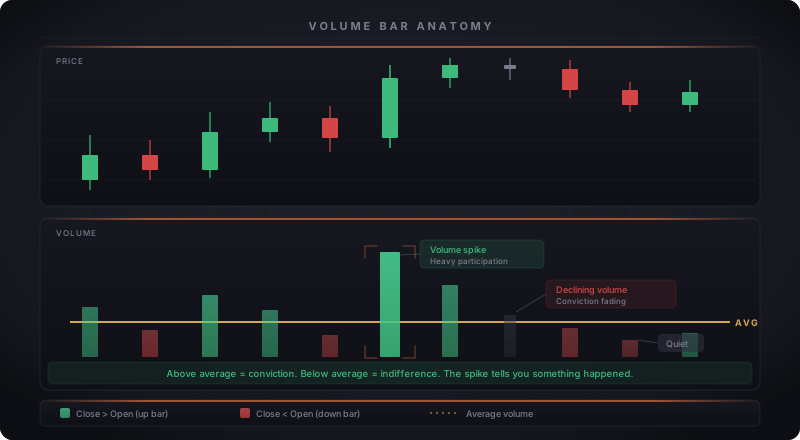
Most charting platforms display volume as vertical bars at the bottom of a price chart. Each bar corresponds to the candle directly above it. Tall bars mean heavy activity. Short bars mean the market was quiet.
Some platforms color volume bars green when price closed higher than it opened and red when it closed lower. This is a convention, not a rule. The color tells you direction, but the height of the bar is what matters most. A tall red bar and a tall green bar both mean the same thing: lots of traders showed up.
The single most important habit you can build with volume is this: compare each bar against the session average, not against random bars. What counts as "high" during the overnight session is completely different from what counts as "high" during the New York open. You need a baseline to make comparisons meaningful.
Here's how to establish that baseline on a 5-minute chart: look at the last 20 to 30 bars during regular trading hours, visually estimate where the "middle" falls, and use that as your reference line. Some platforms let you add a moving average to the volume pane (a 20-period moving average works well). Anything above that line is above-average participation. Anything well below it is quiet.
Roughly 15,000 contracts per bar during normal RTH activity
45,000 contracts on a breakout bar = 3x the session average
8,000 contracts = roughly half the average
The breakout bar had strong participation (3x average). The follow-through bar saw participation drop below average. Interest surged, then faded.
When volume is 3x or more above the session average, something meaningful is happening. When it drops below average immediately after, the urgency didn't sustain. Watch the next few bars to see if buyers or sellers re-engage.
Here's what to watch for:
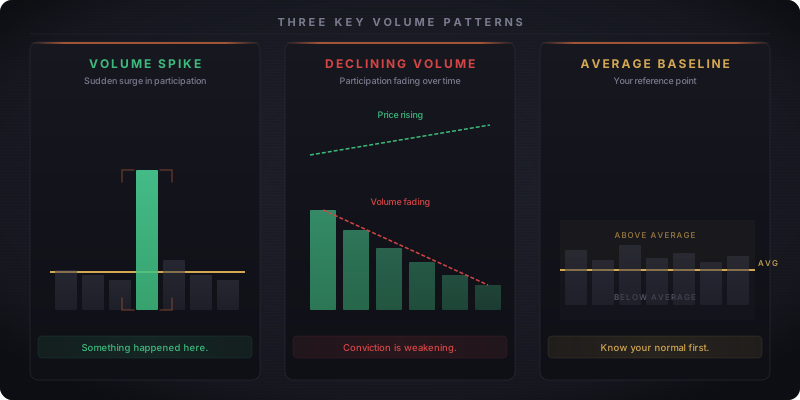
Volume spikes stand out as bars dramatically taller than the surrounding ones. They signal moments when something forced participants to act: a news release, a key level break, a stop cascade. When you see a spike, ask yourself what happened on the chart at that moment.
Declining volume over several bars means participation is fading. If price is moving up but volume shrinks with each bar, fewer traders are supporting that move. The market is losing conviction.
Average volume provides your baseline. Compare individual bars against the average for the session, not against random points.
Volume as Confirmation
Volume doesn't predict where price will go. It tells you whether other traders agree with the move that's already happening. That's an important distinction, and it's one of the most common misconceptions newer traders carry.
Most beginners think "high volume means price will go up." You can see why the mistake feels logical: you notice volume spike and price rise at the same time, so your brain links them as cause and effect. But correlation in timing isn't causation. High volume means conviction behind the current direction, whatever that direction is. A massive volume bar on a down move is bearish conviction, not a buying signal. A massive volume bar on an up move is bullish conviction. Volume measures intensity, not polarity. The direction comes from price. Volume tells you how much the market cared.
When price breaks through a resistance level and volume jumps above average, that's volume confirmation. The move has participation. Traders are actively entering positions at the new price. That doesn't guarantee the move continues, but it means the breakout isn't just one or two traders pushing price through a thin order book.
When price breaks through that same level but volume stays flat or drops, that's a warning sign. The breakout happened, but nobody showed up. Moves like that reverse more often than they hold.
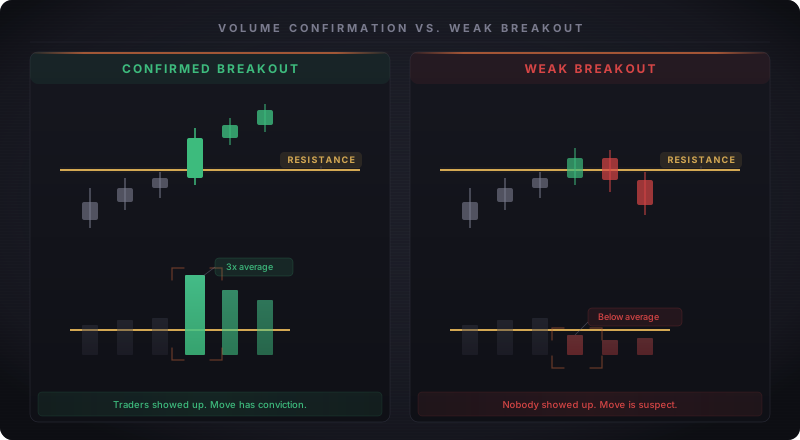
The same logic works in reverse. If price drops hard and volume surges, sellers are in control and they mean it. If price drops on declining volume, the selling pressure might be running out. The absence of volume after a move is as important as the presence of volume during one.
When Volume Surges but Price Doesn't Move
There's one more pattern worth knowing early, and it catches a lot of newer traders off guard: high volume with little price movement.
When a single bar shows 5x the session average volume but price barely moves (small body, short wicks), it means aggressive buying and aggressive selling are roughly matched. A lot of contracts changed hands, but neither side won. Think of it as two equally strong teams in a tug-of-war. The rope is vibrating with effort, but it's not going anywhere.
This pattern often shows up at significant price levels: round numbers, previous day's high or low, value area boundaries. Both sides have conviction at that price, and they're fighting over it. The stalemate won't last forever. Eventually one side runs out of ammunition, and price breaks in the winning direction. The longer the fight and the higher the volume, the more explosive the resolution tends to be.
Volume in Futures vs. Other Markets
If you're coming to futures from forex or stock CFDs, you need to understand a critical difference in what "volume" means across markets.
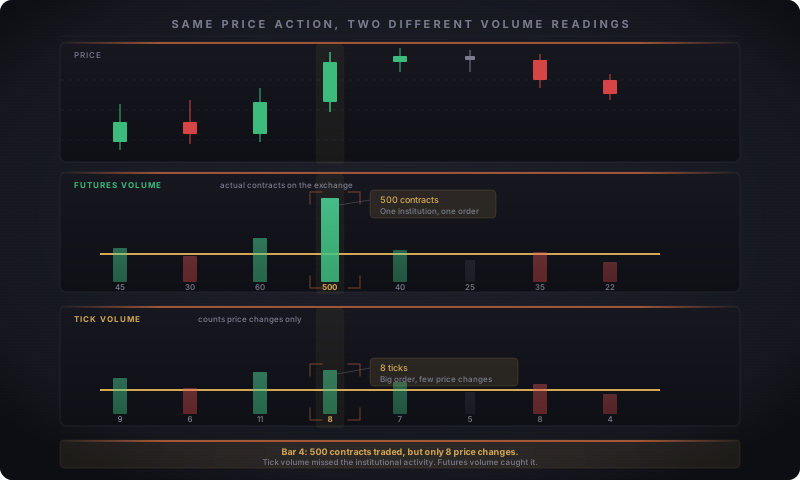
Futures volume has an advantage: it's centralized and real. When you see volume on an ES chart, those are actual contracts traded on the CME. Every transaction is recorded and reported through a single exchange. There's no guessing. The number is the number.
In forex and many CFD markets, "volume" is often tick volume, which counts price changes, not transactions. A tick volume reading of 500 means price updated 500 times, not that 500 contracts traded. Tick volume correlates loosely with real volume (when the market is active, price updates more frequently), but it's an approximation, not a measurement.
Why does this matter? Because the confirmation and divergence patterns you just learned are most reliable when volume data is real. When you see a volume spike on ES confirming a breakout, that's actual capital flowing into the market. When you see a tick volume spike on a forex pair, you know price was changing rapidly, but you don't know how much money was behind it. The confidence level is different.
This is one of the structural advantages of trading futures. The data is real, centralized, and public. You're not guessing about participation. You're measuring it.
One practical note: futures volume varies dramatically by session. The regular trading session (8:30 AM to 3:00 PM CT for ES) carries the heaviest volume. The overnight session trades at a fraction of that. Don't compare a 2 AM volume bar to a 10 AM volume bar and draw conclusions. They're playing different games. You learned about spread differences between sessions in "The Bid, the Ask, and the Spread" (Lesson 5). Volume follows the same pattern: thin overnight, heavy during RTH.
Volume at Price: A Different Lens
Everything you've learned so far looks at volume through time: how many contracts traded during this 5-minute bar, this hour, this session. That's the default view on every charting platform, and it's where every trader starts.
But there's another way to look at volume that answers a fundamentally different question. Instead of "how much volume occurred during this time period?" you can ask "how much volume occurred at this specific price?" That's volume at price, and it changes how you think about levels on a chart.
Here's the intuition: imagine you could stack every contract traded during a session and sort them by the price where the transaction happened. Some prices would have enormous stacks. Others would have almost nothing. The prices with the biggest stacks are where the market spent the most time and where the most participants agreed that price was fair. The prices with tiny stacks are where price moved through quickly, either because nobody wanted to trade there or because one side overwhelmed the other.
This matters because those high-volume prices act like magnets. Price tends to return to levels where lots of trading happened, because that's where the most positions were built. Prices with thin volume act like highways: price passes through them fast in both directions because there's nothing to slow it down.
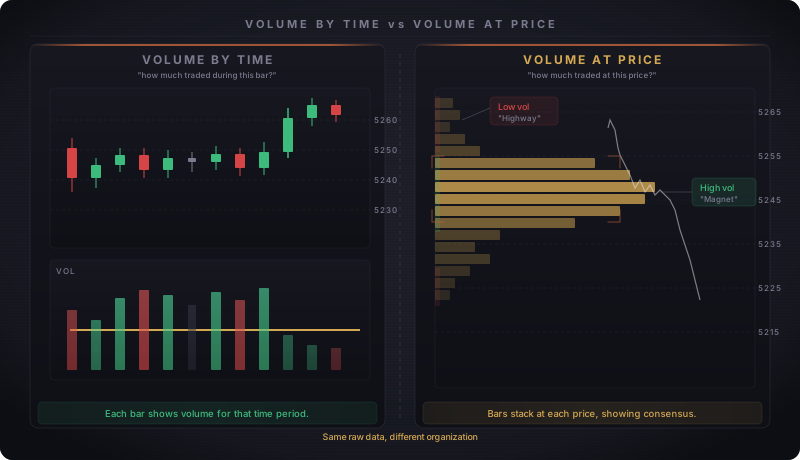
Most platforms offer a tool called volume profile that visualizes this data as horizontal bars on the price axis. You'll work with volume profile in depth in later modules. For now, the key concept is this: volume by time tells you when the market was active. Volume at price tells you where the market agreed on value. Both views use the same raw data, just organized differently.
You just learned that comparing volume bars requires a session-specific baseline, because "high volume" at 2 AM and 10 AM mean completely different things. The next lesson, "Trading Sessions and Market Hours" (Lesson 9), explains exactly why that baseline changes so dramatically: which sessions carry the heaviest volume, when liquidity thins out, and how to structure your trading day around that schedule.