What OHLC Actually Means
Every candlestick on your chart captures a single time period, whether that's one minute, five minutes, or a full day. Regardless of the timeframe, each candle records the same four data points:
- Open: the first price traded when the period started
- High: the highest price reached during the period
- Low: the lowest price reached during the period
- Close: the last price traded when the period ended
In "The Bid, the Ask, and the Spread" (Lesson 5), you learned that every trade happens at either the bid or the ask. Those same prices drive what you see on a candlestick. The high is the highest ask that a buyer was willing to pay during the period. The low is the lowest bid that a seller accepted. The open and close are simply the first and last trades.
Think of each candle as a round in a boxing match. The open is where the round starts. The high is the furthest the buyers pushed. The low is the furthest the sellers pushed. And the close is who was winning when the bell rang. A candle doesn't tell you what happened tick by tick inside the period. It tells you the result: who started, who pushed hardest in each direction, and who finished on top.
The open and close show you who won. If the close is above the open, buyers were in control when the period ended. If it's below, sellers won. The high and low show you how far each side swung before losing ground.
Three Chart Types and Why Candlesticks Win
You'll see three main chart types on every trading platform: line charts, bar charts, and candlestick charts. They all use the same underlying price data, but they don't show the same amount of it.
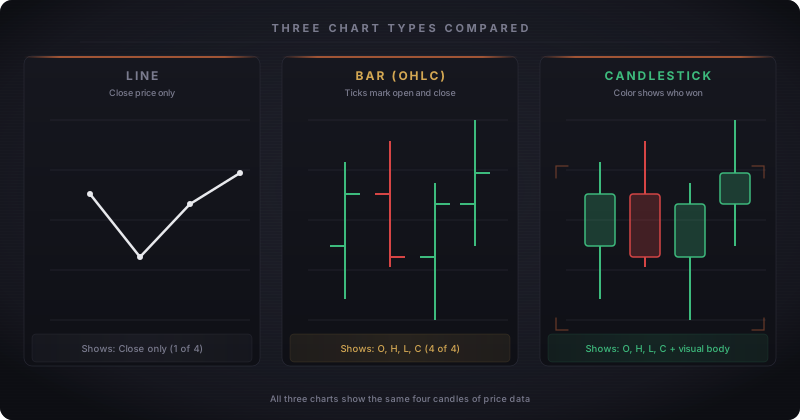
Line charts connect closing prices with a single line. One data point per period: the close. You lose the open, the high, and the low entirely. Line charts look clean, but they hide the fight that happened inside each period. You won't see wicks, rejections, or the tug-of-war between buyers and sellers.
Bar charts (also called OHLC bars) show all four data points. A vertical line marks the high-to-low range. A small horizontal tick on the left marks the open, and one on the right marks the close. Bar charts give you the full picture, but they're harder to read at speed. You have to squint at tiny horizontal ticks to figure out who won each period.
Candlestick charts show the exact same four data points as bar charts, but they add a filled or colored body between the open and close. A green (or hollow) body means the close was above the open: buyers won. A red (or filled) body means the close was below: sellers won.
That colored body is why most futures traders default to candlesticks. This course uses candlestick charts exclusively. The principles apply to bar charts too, but candlesticks make the buyer/seller story visible at a glance.
Reading the Story a Single Candle Tells
Now that you know what the four prices mean, you can start reading individual candles. There are three things to look at: the body, the wicks, and the body's position within the overall range.
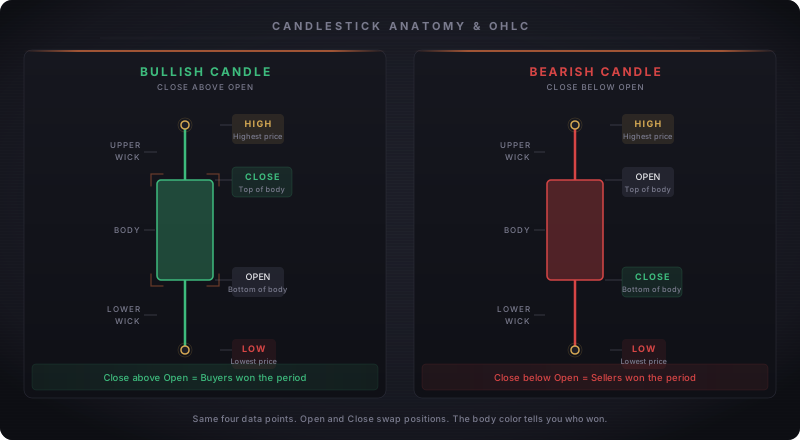
The body is the rectangle between the open and close. A tall body means there was a big gap between where price started and where it ended. That's conviction. One side clearly dominated. A small body means the open and close were close together. That's indecision, a tight fight with no clear winner.
The wicks (also called shadows) are the thin lines above and below the body. They show the price range that was explored but ultimately rejected.
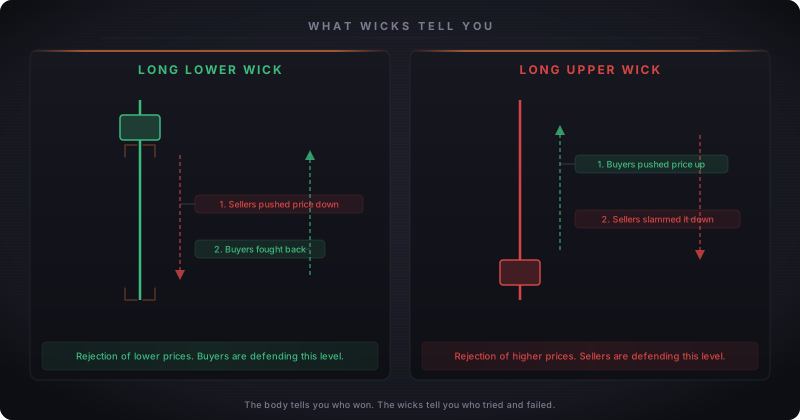
A long upper wick means buyers pushed price up, but sellers drove it back down before the close. A long lower wick means sellers pushed price down, but buyers fought back and reclaimed most of the ground.
The body's position tells you who had the final word. A small body near the top of the range with a long lower wick? Sellers pushed hard, but buyers overwhelmed them and closed near the high. That's rejection of lower prices. A small body near the bottom with a long upper wick? Buyers tried to take control, but sellers slammed it back down.
You can also gauge the intensity of the fight by looking at the body-to-range ratio. If the body fills 80% of the candle's total range (high minus low), one side dominated. If the body fills only 10-20% of the range, both sides swung hard but ended in a near-stalemate.
5,210.00
5,204.00
5,210 - 5,204 = 6.00 points
5,205.00
5,209.50
5,209.50 - 5,205.00 = 4.50 points
4.50 / 6.00 = 75%
A 75% body-to-range ratio means buyers dominated this period convincingly. The wicks are short relative to the body. There was minimal fight from sellers. Compare this to a candle with the same 6-point range but only a 0.50-point body (8% ratio), which would signal heavy two-sided fighting with no clear winner.
Reading Candle Sequences
A single candle tells you who won one round. But a boxing match isn't decided by one round. Reading candle sequences is like watching multiple rounds play out. You're looking for who's landing more punches, who's getting tired, and whether the momentum is shifting between rounds.
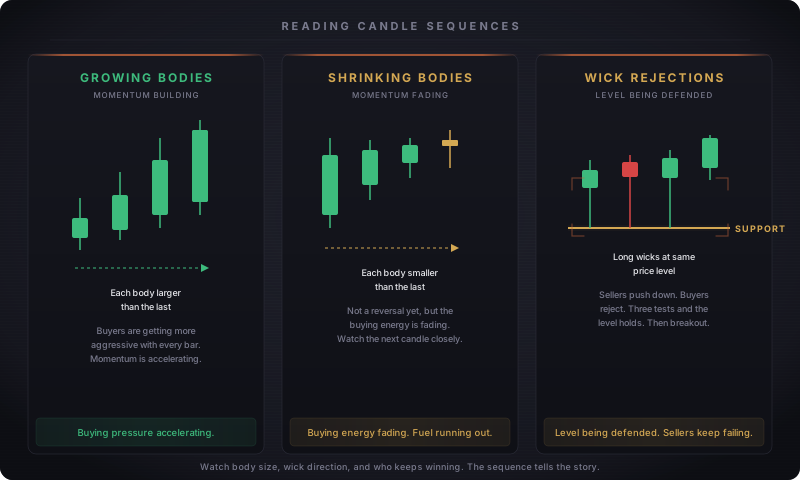
You don't need to memorize pattern names like "morning star" or "three white soldiers" to read sequences. You need to watch for three things: body size changes, wick direction shifts, and who keeps winning.
Growing bodies mean momentum is building. Three consecutive green candles with each body larger than the last? Buying pressure is accelerating. The opposite sequence with expanding red bodies signals accelerating selling.
Shrinking bodies mean momentum is fading. A large green candle followed by a smaller green candle followed by an even smaller one? Buyers are running out of energy. The trend isn't reversing yet, but the fuel is drying up.
Wick rejections on consecutive candles tell you a price level is being defended. If three candles in a row all have long lower wicks around the same price, buyers keep stepping in at that level. Sellers are trying to push through, and they keep failing.
Most beginners think reading a chart means memorizing dozens of named patterns: hammers, dojis, engulfing bars, morning stars, three white soldiers. The names feel like a vocabulary list you need to master before you can read anything. That instinct is understandable but backwards.
Every named pattern is just a shorthand for a specific combination of the body-and-wick relationships you've already learned in this lesson. A "hammer" is a candle with a small body near the top and a long lower wick. You already know what that means: sellers pushed hard, buyers rejected them. Starting with pattern names actually slows you down, because you end up memorizing shapes instead of understanding the buyer/seller fight each candle represents.
There's one more data layer that changes how you read candles, and that's volume: how many contracts traded during each period. A large green candle backed by high volume tells a very different story than the same candle on thin volume. In "Volume: The Market's Footprint" (Lesson 8), you'll add volume to everything you've learned here. For now, focus on the price story. Get comfortable reading bodies, wicks, and sequences before adding more variables.
The next lesson covers timeframes: what changes when you look at the same market on a 1-minute chart versus a 15-minute chart versus a daily chart. The answer isn't "everything." It's "your perspective." Understanding that distinction keeps you from making decisions based on noise.